Mon to Fri, 8:00am to 5:00pmUtalii Court, Gesora Road, Nairobi

+254 184 379 590+254 719 450 317 Altinfo@gstechguard.co.ke

Exit signs · escape route lighting · battery testing

Emergency Lighting Systems for Safe Movement During Outages

We design, install and maintain emergency lighting systems in Kenya for offices, schools, warehouses, hotels, hospitals and apartments. When the power fails, the fittings light escape routes, stairs and exit signs automatically, so people can leave the building calmly and safely.

  • Escape routes, stairs and exits covered
  • Maintained and non-maintained fittings
  • Monthly and yearly testing with records
Illuminated exit sign and emergency lighting systems in an office corridor

Power cuts happen often in Kenya, and they always seem to come at the worst moment. In an office corridor, a stairwell or a busy warehouse, sudden darkness causes falls and panic. In a fire, it can trap people. Emergency lighting systems switch on automatically the moment the mains supply fails and keep escape routes lit long enough for everyone to get out.

So this page explains where emergency lighting is needed, the types of fittings, how we plan layouts, and the testing that keeps systems working.

Coverage

Where emergency lighting is needed

Emergency lighting covers more than exit signs. A complete design lights the full route out of the building and the places where people might get hurt in the dark.

The design standard most often followed in Kenya is BS 5266-1, which sets out these points and the light levels needed. We confirm the standard with you, your architect or your insurer at the start.

Support and maintenance

Maintained and non-maintained fittings

There are two main modes for emergency lighting systems. In practice, most buildings use both.

Mode How it works Typical use
Maintained Light is on all the time and stays on when power fails Exit signs in public areas, cinemas, halls, hotels
Non-maintained Light is off normally and switches on only when power fails Corridors, stairs, offices, plant rooms
Sustained Has two lamps: one on mains, one on battery Specialist uses

Most exit signs run maintained, so people always see the route. Most bulkhead and downlight fittings run non-maintained. In addition, many modern buildings use self-test fittings that check themselves and show a status light, which saves time on testing.

Power backup

Self-contained or central battery?

Each fitting can carry its own battery (self-contained), or a central battery system can power many fittings through fire-resistant cables.

  • Self-contained suits small and medium buildings. It is simple to install and each fitting works independently.
  • Central battery suits large buildings with many fittings. Maintenance happens in one place, though the cabling must be fire-rated and the battery room protected.

Therefore, for most offices, schools and apartments, self-contained LED fittings are the practical choice.

Emergency exit lighting above a door in an industrial building
Emergency lighting systems must light every exit and change of direction on the escape route.

How it works

Installation and escape-route planning

  1. Survey. We walk every escape route, note doors, stairs, junctions and open areas and check the existing lighting.
  2. Design. Next, we mark fittings and exit signs on the floor plans to meet the agreed standard.
  3. Supply. We choose LED fittings with good light output and battery life, rated for the environment.
  4. Install. Our technicians connect each fitting to the local lighting circuit, so it senses a real power failure.
  5. Commission. Then we test every fitting, check light levels and record the results.
  6. Hand over. Finally, you receive drawings, a test logbook and staff guidance on monthly checks.

Connecting fittings to the local lighting circuit also matters. If they connect to a different circuit, a local fault can plunge an area into darkness while the emergency lights stay off.

Exit sign at the end of an office hallway

Fire safety

Duration: how long should emergency lighting last?

Most premises use a three-hour duration. That covers evacuation, the time firefighters may need and the chance that people return to a building once power returns. Some small premises that will be evacuated immediately and not reoccupied may accept one hour, but three hours is the common choice in Kenya because outages can last for some time. We recommend three-hour fittings for almost every project.

Support and maintenance

Testing and maintenance

However, batteries wear out, usually after three to five years. Without testing, you only discover this during an emergency. Good practice for emergency lighting systems includes:

Test Frequency What happens
Short functional test Monthly Cut mains briefly and check every fitting lights
Full-duration test Yearly Run on battery for the full rated time and check every fitting stays lit
Visual check Daily or weekly Confirm indicator lights show healthy charging

Record every test in a logbook. Auditors and insurers often ask to see it. Our fire alarm maintenance plans can include emergency lighting tests, so one visit covers both.

Fire safety

Emergency lighting systems in different buildings

Each type of building has its own weak spots, so we adapt the layout.

  • Offices: open-plan floors need anti-panic lighting, while stairs and lift lobbies need careful coverage.
  • Schools: long corridors and dormitories need clear exit signs that children understand, plus lighting on outdoor routes to assembly points.
  • Warehouses: high ceilings need powerful fittings, and dangerous machinery needs task lighting so operators can shut down safely.
  • Hotels and apartments: guests and residents do not know the back routes, so signs must be obvious from every corridor.
  • Hospitals: wards and theatres need lighting that lets staff keep working while patients are moved.

In every case, we also check the outside. People leave the building and still need to see steps, ramps and the route to the assembly point. For this reason, external emergency fittings near final exits are often worth adding.

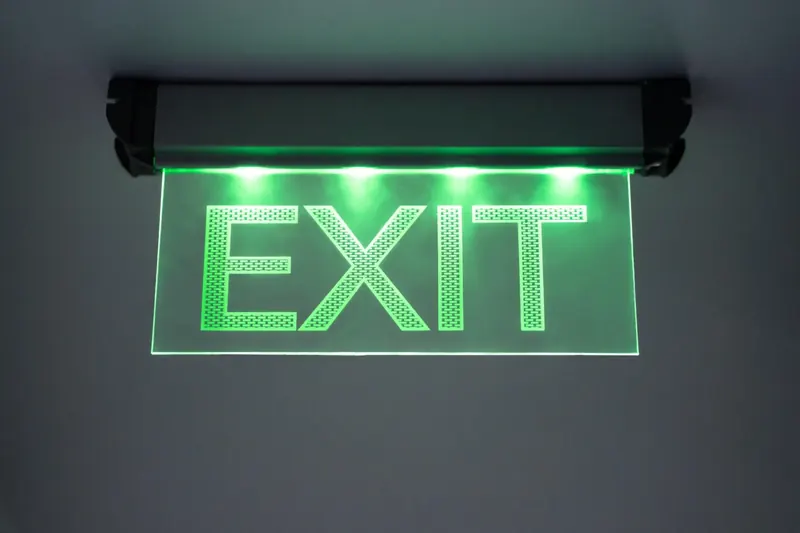
Illuminated green emergency exit sign

Signs and pictograms

Also, exit signs should use the running-man pictogram with an arrow showing direction. Signs must be visible from anywhere on the route, especially at junctions. Old signs with only the word "EXIT" or mixed styles confuse people, so we replace them with a consistent set during upgrades.

Upgrading old systems

Meanwhile, many buildings still have old fluorescent emergency fittings with tired batteries, or exit signs that no longer light. Upgrading to LED brings longer battery life, lower power use and brighter light. We can replace fittings one-for-one where the layout is good, or redesign the layout where the building has changed. Either way, we leave you with drawings and test records.

Emergency lighting systems and the wider fire plan

Lighting works alongside detection and warning. The fire alarm installation raises the alarm, escape doors release through access control, and emergency lighting guides people out. For a full review, our fire safety audit support checks lighting coverage and records along with the other systems, and our fire safety systems overview shows how the layers connect.

The Kenyan rules on fire safety at work require safe means of escape. You can read the background in the Occupational Safety and Health Act on Kenya Law.

Emergency lighting systems cost factors

The cost depends on the number of fittings and exit signs, the type (self-contained or central battery, self-test or manual), ceiling heights, cabling and whether old fittings need removal. As a rough guide, supplied and installed LED emergency fittings and exit signs often range from KSh 4,000 to KSh 12,000 per point, depending on type. We provide an itemised quote after a survey.

Why choose us

Why choose GS TechGuard

  • Layouts based on a recognised standard, not guesswork.
  • Fittings wired to the local lighting circuit, as they should be.
  • Testing and records from day one.
  • One team for lighting, alarms, access control and power.

To plan or upgrade emergency lighting systems in your building, request a site survey. We serve Nairobi and towns across Kenya.

Get started

Book a site survey

Tell us about your site and an engineer will call you back within one working day to discuss your needs and arrange a visit.

  • Clear, itemised written quote
  • Security, network, fire and power from one team
  • Support and maintenance after handover

Prefer to talk? Call +254 184 379 590

We reply within one working day. Or call +254 184 379 590.

Frequently asked questions

How long should emergency lighting last in an outage?

Most premises use a three-hour duration, which covers evacuation, firefighting time and the chance that people return to the building after power comes back. A one-hour duration is only acceptable in limited cases. Because power cuts in Kenya can last a while, we recommend three-hour fittings for almost every building.

How often should emergency lighting be tested?

Run a short functional test every month by cutting the mains briefly and checking each fitting lights. Once a year, run a full-duration test for the rated time, usually three hours. Record every test in a logbook. Self-test fittings make this easier by checking themselves and showing their status.

What is the difference between maintained and non-maintained lights?

Maintained fittings stay on all the time and remain lit when the power fails, which suits exit signs in public areas. Non-maintained fittings stay off and only switch on during a power failure, which suits corridors, stairs and offices. Most buildings use a mix of both.

Do emergency lights need special wiring?

Self-contained fittings connect to the normal local lighting circuit, so they sense a failure in that area, plus a permanent supply for charging if they are maintained. Central battery systems need fire-resistant cable. We wire each type to suit the design and the agreed standard.

Areas we serve

Installed and supported across Kenya

Our Nairobi team travels to sites countrywide. Choose your town for local details.

Planning a project or fixing a fault?

Tell us about the site. We will arrange a survey, give you a clear written quote and explain the options in plain language.

CallWhatsAppAsk usQuote