Mon to Fri, 8:00am to 5:00pmUtalii Court, Gesora Road, Nairobi

+254 184 379 590+254 719 450 317 Altinfo@gstechguard.co.ke

Security and surveillance

Security Systems Installation in Kenya

GS TechGuard offers security systems installation across Kenya for businesses, estates and institutions. We design layered protection, from the gate to the server room, and install CCTV, access control, biometrics, intercoms, boom barriers and screening equipment as one coordinated system.

  • One survey covers cameras, doors, gates and power
  • Systems designed to work together, not side by side
  • Local support after handover
Cameras from a security systems installation on the glass facade of a Nairobi office building

Good security is not one product. It is a set of layers that slow an intruder down, record what happened and help your staff respond. A camera without good lighting records shadows. Likewise, a card reader on a door with a weak frame only looks secure. That is why we treat security systems installation as one design job rather than a list of separate purchases.

This page gives an overview of the systems we install, how they fit together and where to go next. Each section links to a detailed service page.

How it works

The layers in every security systems installation

We think about a site from the outside in. Each layer has a job, and each one supports the next.

Layer What it does Typical systems
Perimeter Marks the boundary and warns early Fence-line cameras, lighting, line-crossing alerts
Entry Controls who and what comes in Boom barriers, intercoms, access control, screening
Interior Protects rooms and valuable stock Door access, cameras in corridors and stores
Monitoring Records and helps people respond NVRs, monitors, phone alerts, guard procedures

During the survey, we look for the weakest point in each layer. For instance, a busy estate may have strong gates but no record of who enters on foot. A warehouse may have cameras everywhere except the loading bay, where most losses happen.

Security officer checking a badge reader at a restricted door
Entry control is often the layer that gives the best return.

CCTV systems and video surveillance

Cameras are the core of most systems because they deter, record and help you investigate. We plan each view around a clear goal: identify a face, read a plate or watch a yard. Then we choose the camera, lens and mounting height to match.

Our CCTV installation in Nairobi page explains IP and analogue options, storage and remote viewing. If you already have cameras that misbehave, our team also handles CCTV maintenance and repair.

Access control and biometrics

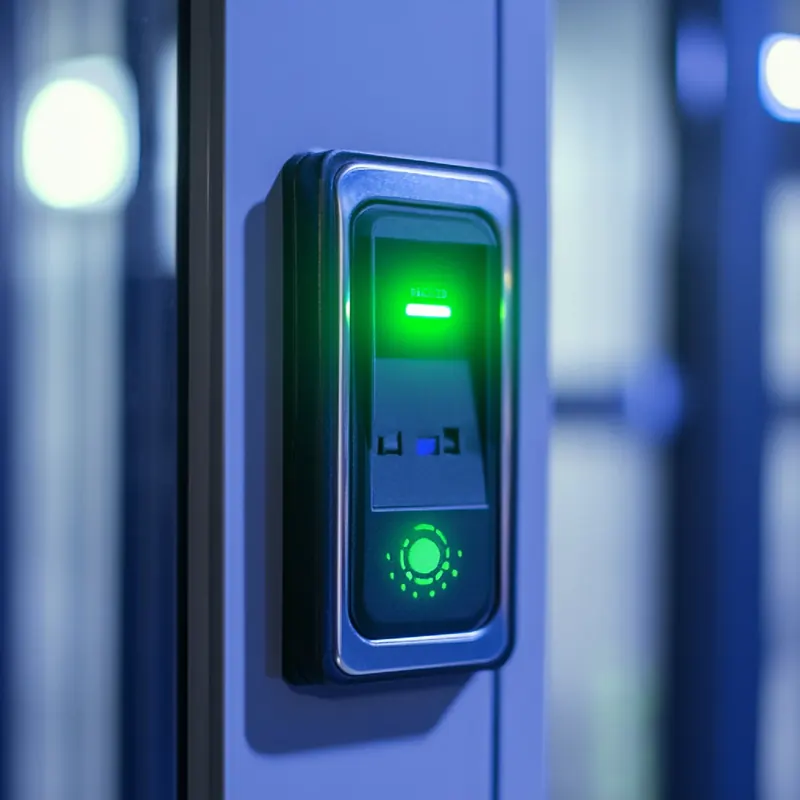
Access control decides who opens which door and when. Staff use cards, PIN codes, phones or fingerprints, and the system keeps a log of every entry. As a result, lost keys stop being a crisis, because you simply cancel a card.

For offices and estates, see our page on access control systems. If you need staff attendance records, our biometric attendance systems page covers fingerprint and face readers, enrolment and payroll reports.

Intercom and video entry

A video intercom lets a guard or resident see a visitor before opening the gate. In apartment blocks, each flat can answer its own calls. Modern IP intercoms also ring a phone, so a tenant at work can still let in a delivery.

We cover door stations, indoor monitors and lock release on our video intercom systems page.

Parking management and boom barriers

Vehicle entry is often the busiest point on a site. A boom barrier with tags or number-plate recognition keeps traffic moving and creates a record of every car. Therefore, guards spend less time writing in logbooks and more time watching.

Read about arm length, safety loops and power backup on our boom barrier installation page. For malls, hospitals and offices with paid parking, our parking management and ANPR page covers ticketing and reports.

Security

Baggage and security screening

Hotels, malls, event venues and some offices screen bags at the door. A screening point usually combines an X-ray baggage scanner, a walk-through metal detector and handheld wands. We help you choose the right size of equipment and plan the layout so queues stay short.

See our page on X-ray baggage scanners for sizes, operator training and servicing.

How it works

How security systems installation fits with network and power

Modern security equipment depends on two things people often forget: the network and the power supply. IP cameras, card readers and intercoms all talk over network cable. In addition, they all stop working when the power fails.

Because we also install structured cabling and UPS power backup, we design these parts together. The table below shows a typical integrated setup.

Part Role in the system
Network switches with PoE Power and connect cameras, readers and intercoms on one cable each
NVR and storage Record cameras and keep footage for the agreed number of days
Access control panel Stores user rights and releases doors
Fire alarm link Unlocks escape doors when the alarm sounds
UPS Keeps the recorder, switches and door locks running in an outage

This joined-up approach also helps when something breaks. One team holds the drawings, the passwords and the history of the site.

Security & Surveillance Systems

Sectors we work in

Schools, estates, warehouses, hospitals and hotels face very different threats. A boarding school worries about who walks through the gate at night. A warehouse worries about stock leaving through the loading bay. Meanwhile, a hotel wants guests to feel safe without feeling watched. So the same camera or reader ends up in very different places from one site to the next.

Every sector has different risks, and our security systems installation plans reflect that.

How it works

What to prepare before a survey

With this, we can usually send a scope and quote within a few working days of the visit.

How it works

Our security systems installation process

The steps stay the same whether the site is a small shop or a business park.

  1. Survey. We walk the site, talk to the people who run it and note risks, routes and power points.
  2. Design. Next, you receive a layout with equipment positions, a written scope and an itemised quote.
  3. Install. Our technicians install cabling, devices and recorders with minimum disruption to your work.
  4. Commission. Then we test every device, set user rights and check recording by day and night.
  5. Train and hand over. Your team learns daily tasks, and you receive drawings, passwords and a record of settings.
  6. Support. After that, we stay available for faults, upgrades and planned maintenance.

How it works

Security systems brands we install

We install and support equipment from manufacturers such as Hikvision, Dahua, ZKTeco and Ubiquiti, and we work with many other brands already on site. We pick models with good local support and spare parts.

Trusted technology partners and platforms

We design, install and support systems built on these recognised security, networking, communication, safety, power, AV, connectivity and cybersecurity platforms. Logos are trademarks of their respective owners.

Security & Surveillance

  • Hikvision
  • Dahua Technology
  • Axis Communications
  • Bosch Security Systems
  • Hanwha Vision
  • Motorola Solutions (Avigilon)

Networking & Infrastructure

  • Ubiquiti (UniFi)
  • Cisco Systems
  • MikroTik
  • D-Link
  • TP-Link
  • Aruba Networks (HPE)
  • Huawei

Access Control & Communication

  • ZKTeco
  • Suprema
  • HID Global
  • Yealink
  • Grandstream Networks
  • ASSA ABLOY

Safety & Power

  • APC (Schneider Electric)
  • Honeywell
  • Notifier
  • Tyco Security Products

ISP Partners

  • Safaricom Business
  • Liquid Intelligent Technologies
  • Faiba

Professional Audio, Visual & Automation

  • Poly (Polycom / HP)
  • Logitech Video Collaboration
  • Crestron Electronics
  • Extron Electronics
  • QSC
  • Shure
  • Sennheiser
  • Bose Professional

Cybersecurity Solutions

  • Palo Alto Networks
  • CrowdStrike
  • Fortinet
  • Cloudflare
  • Okta
  • Zscaler
  • Check Point Software
  • SentinelOne
  • Trend Micro
  • Sophos
  • Microsoft Security
  • Cisco Security
  • Bitdefender

Why choose us

Why one contractor makes sense

Many sites end up with a camera installer, an access installer, an electrician and an IT company who never meet. Then, when a door will not open during a power cut, each blames the other. A single team for security systems installation avoids that problem. In addition, it saves money, because one survey, one cable plan and one power plan serve every system.

The law also matters. Workplaces in Kenya must keep escape routes usable and manage risks under the Occupational Safety and Health Act, 2007. Doors with electronic locks must still open in an emergency, and camera footage must respect privacy rules. We design with both in mind, so security never blocks safety. We design, install, document and support the full system, so you have one number to call.

Ready to start? Request a quote for a site survey, or see the security systems price guide for typical budgets.

Get started

Book a site survey

Tell us about your site and an engineer will call you back within one working day to discuss your needs and arrange a visit.

  • Clear, itemised written quote
  • Security, network, fire and power from one team
  • Support and maintenance after handover

Prefer to talk? Call +254 184 379 590

We reply within one working day. Or call +254 184 379 590.

Frequently asked questions

What security systems do you install in Kenya?

We install CCTV, access control, biometric attendance and door readers, video intercoms, boom barriers, parking and ANPR systems, and X-ray baggage screening. We also install the cabling, network and UPS power backup these systems need. As a result, one team can handle the full security systems installation on your site.

Can CCTV, access control and intercom run as one system?

Yes. They can share one network, one power backup plan and, in many cases, one viewing screen for guards. For example, an intercom call can pop up the gate camera, and a forced door can raise a camera alert. We plan these links during the design so everything works together on day one.

What does a security site survey include?

An engineer walks the site with you and notes entrances, perimeter, lighting, cable routes, power points and existing equipment. We discuss your main risks and daily routines. Afterwards, you receive a layout, a written scope and an itemised quote. Survey terms, including any fee, are confirmed when we book the visit.

Do you provide maintenance after installation?

Yes. We offer single service visits and yearly maintenance plans that cover cleaning, testing, firmware updates and recording checks. We also maintain systems that another company installed. Our IT annual maintenance contracts can cover security, network and power equipment under one agreement.

Areas we serve

Installed and supported across Kenya

Our Nairobi team travels to sites countrywide. Choose your town for local details.

Planning a project or fixing a fault?

Tell us about the site. We will arrange a survey, give you a clear written quote and explain the options in plain language.

CallWhatsAppAsk usQuote