Mon to Fri, 8:00am to 5:00pmUtalii Court, Gesora Road, Nairobi

+254 184 379 590+254 719 450 317 Altinfo@gstechguard.co.ke

Detection · alarms · lighting · suppression · evacuation

Fire Safety and Life Safety Systems in Kenya

GS TechGuard designs, installs and maintains fire safety systems in Kenya for offices, apartments, schools, hospitals, hotels and warehouses. We cover fire detection and alarms, emergency lighting, gas suppression, voice evacuation and audit support, and we link them with your doors, lifts and power so the whole building responds as one.

  • Detection, warning, lighting and suppression planned together
  • Links to doors, lifts, PA and power backup
  • Testing, records and maintenance after handover
Engineer installing a fire alarm control panel as part of fire safety systems in Kenya

A fire safety system has one job: get everyone out alive and limit the damage. That sounds simple, but it depends on many parts working in the right order. Detectors must sense smoke early. Sounders must reach every room. Escape doors must open, and exit routes must stay lit when the power fails. Fire safety systems that are designed together do this reliably. Systems bolted on one at a time often do not.

So this page explains each layer, how they connect, what Kenyan law expects of workplaces and how we keep systems working after installation. Each section links to a detailed service page.

Fire safety

The layers of fire safety systems

Layer Purpose Typical equipment
Detection Notice a fire as early as possible Smoke, heat and multi-sensor detectors, beam detectors
Warning Tell everyone to leave Sounders, beacons, voice evacuation speakers
Escape Help people find and use exits Emergency lighting, exit signs, door releases
Suppression Control or put out the fire Extinguishers, sprinklers, gas suppression
Management Prove the system works Logbooks, tests, drills, maintenance records, audits

Each layer relies on the others. For example, a perfect alarm is wasted if staff cannot see the exit signs in smoke. That is why our fire safety systems projects start with the building as a whole.

Fire safety

Fire detection and alarm

Detection and alarm form the core of most fire safety systems. A control panel watches detectors and manual call points across the building. When a detector senses smoke or heat, or someone breaks a call point, the panel sounds the alarm and shows the location.

Larger buildings usually need addressable systems, which pinpoint the exact device that triggered. Smaller sites may suit conventional systems that report by zone. Our fire alarm installation page explains the choice in detail, along with design, cabling and commissioning.

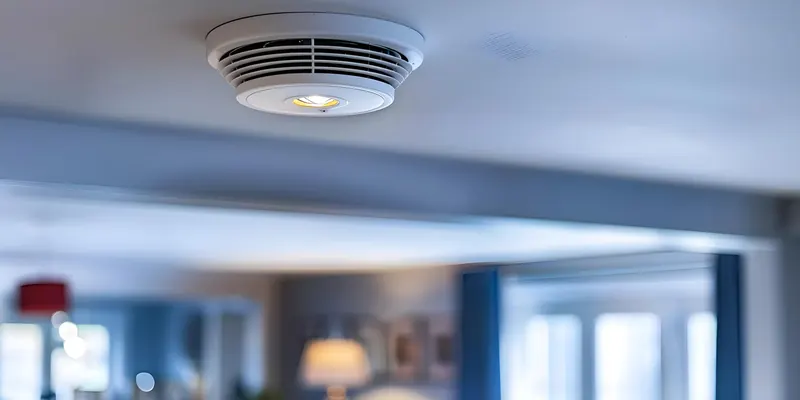
Smoke detector mounted on a ceiling as part of building fire safety systems
Detector type and spacing depend on the room, its ceiling height and what happens there.

Emergency lighting

When a fire cuts the power, or smoke fills a corridor, people still need light to escape. Emergency lighting switches on automatically during a power failure and lights the escape route, stairs and exit signs for a set period, usually up to three hours. See our emergency lighting page for fittings, layout and testing.

Fire suppression

In addition, some rooms hold equipment or records that water would destroy, such as server rooms, archives and control rooms. Gas suppression systems release a clean agent that puts out the fire without damaging electronics. Our fire suppression page covers where suppression makes sense and how it links to detection.

Fire safety

Voice evacuation

In hotels, malls, hospitals and campuses, a plain bell can cause confusion. Voice evacuation plays clear, recorded messages, zone by zone, and lets staff make live announcements. Research and long experience show that people react faster to spoken instructions than to tones. Read more on our voice evacuation page.

Fire safety

Fire safety audits and compliance in Kenya

Kenyan workplaces fall under the Occupational Safety and Health Act, 2007, and the Factories and Other Places of Work (Fire Risk Reduction) Rules, 2007, made under it. These rules cover fire risk management, firefighting equipment, means of escape, drills and record keeping, and they call for regular fire safety audits by a qualified auditor. You can read the Act on Kenya Law.

GS TechGuard provides fire safety audit support. We inspect your fire safety systems, find gaps and fix them, so you are ready for the statutory audit. Our fire safety audit page explains what that support covers and when you need a registered auditor.

A note on standards

Kenya does not use one single design code for every building. In practice, many designers follow British Standards such as BS 5839 for fire alarms and BS 5266 for emergency lighting, or NFPA codes from the National Fire Protection Association. We agree the standard with you, your architect or your insurer at the design stage and follow it throughout.

Safety officers checking fire extinguishers on a warehouse floor

Fire safety

How fire safety systems connect to the rest of the building

Power also matters. Fire panels carry their own standby batteries, and we check that they can run the system for the required time. Meanwhile, other building systems that support escape, such as access control, need their own UPS backup.

Support and maintenance

Maintenance and testing

Fire safety systems only protect people if they work on the day of a fire. Common good practice includes:

Task Typical frequency Who
Call point test and alarm sound check Weekly Your staff, with a logbook
Emergency lighting flick test Monthly Your staff
Fire alarm service visit Every 6 months Competent technician
Full-duration emergency lighting test Yearly Competent technician
Fire drill At least yearly, often more Management
Suppression system inspection Every 6 to 12 months Competent technician

Our fire alarm maintenance service covers inspections, repairs and records. We also maintain fire safety systems that other companies installed.

Common problems

Common gaps we find in existing buildings

When we inspect older buildings, the same problems come up again and again. Firstly, detectors have been painted over during renovations, which blocks smoke from reaching the sensor. Secondly, new partitions have created rooms with no detector at all. Thirdly, the panel shows faults that everyone has learned to ignore. In addition, emergency light batteries have died quietly, exit signs point to doors that are now locked, and nobody has held a drill in years.

None of these gaps is expensive to fix on its own. However, together they can turn a compliant building into a dangerous one. So our inspection report lists each gap with a priority and a price, and we can fix the urgent items first while you budget for the rest.

How it works

Our fire safety systems process

  1. Survey. We inspect the building, read drawings and note uses, occupancy and existing equipment.
  2. Design. Next, you receive layouts for detectors, call points, sounders, lighting and interfaces.
  3. Install. Our technicians use fire-rated cable, neat containment and correct device spacing.
  4. Commission. Then we test every device, every interface and the battery standby time.
  5. Hand over. You receive drawings, a zone chart, test certificates and a logbook, plus staff training.
  6. Maintain. Finally, we schedule service visits and keep your records current.
Safety officer ticking a checklist beside red fire suppression cylinders

Why choose us

Why choose GS TechGuard for fire safety systems

  • Joined-up design: fire, security, network and power planned together.
  • Clear records: drawings, test results and logbooks you can show an auditor or insurer.
  • Honest scope: we say clearly what we certify and when you need a registered auditor.
  • Local support: maintenance visits and fault response across Kenya.

To plan or upgrade fire safety systems for your building, request a site survey. We will inspect what you have, explain the gaps and give you a clear, itemised quote.

Fire extinguisher with an inspection checklist

Get started

Book a site survey

Tell us about your site and an engineer will call you back within one working day to discuss your needs and arrange a visit.

  • Clear, itemised written quote
  • Security, network, fire and power from one team
  • Support and maintenance after handover

Prefer to talk? Call +254 184 379 590

We reply within one working day. Or call +254 184 379 590.

Frequently asked questions

What fire safety systems does a commercial building need in Kenya?

Most commercial buildings need fire detection and alarm, emergency lighting with exit signs, suitable fire extinguishers and clear escape routes. Some rooms or buildings also need sprinklers, gas suppression or voice evacuation. The right mix depends on size, use and occupancy. A survey and your fire safety audit show what applies.

How often should a fire alarm be tested?

Good practice is a weekly call point test by your staff, with results in a logbook, and a professional service visit every six months. Emergency lighting needs a monthly short test and a yearly full-duration test. Your insurer or auditor may set additional requirements.

Do you maintain systems you did not install?

Yes. We often take over fire alarm, emergency lighting and suppression systems installed by others. We start with an inspection and a written report on faults and gaps, then agree a maintenance plan and fixed prices for any repairs.

Can the fire alarm unlock doors and stop lifts?

Yes. A modern fire panel can release electronically locked escape doors, return lifts to the ground floor, shut down air handling and switch the PA to evacuation messages. We design and test these links during commissioning, so the whole building responds together.

Areas we serve

Installed and supported across Kenya

Our Nairobi team travels to sites countrywide. Choose your town for local details.

Planning a project or fixing a fault?

Tell us about the site. We will arrange a survey, give you a clear written quote and explain the options in plain language.

CallWhatsAppAsk usQuote