
Mon to Fri, 8:00am to 5:00pmUtalii Court, Gesora Road, Nairobi

+254 184 379 590+254 719 450 317 Altinfo@gstechguard.co.ke

CAT6 · CAT6A · fibre · testing and labelling

Structured Cabling Company in Nairobi for Reliable Business Networks

GS TechGuard installs structured cabling in Nairobi and across Kenya for offices, schools, hospitals and warehouses. We plan every data point, run CAT6, CAT6A and fibre in proper containment, terminate into tidy racks, test every link and hand over labelled drawings you can rely on for years.

  • Every link tested, with results you keep
  • Labelled outlets, panels and drawings
  • Clean routes, containment and fire-stopping
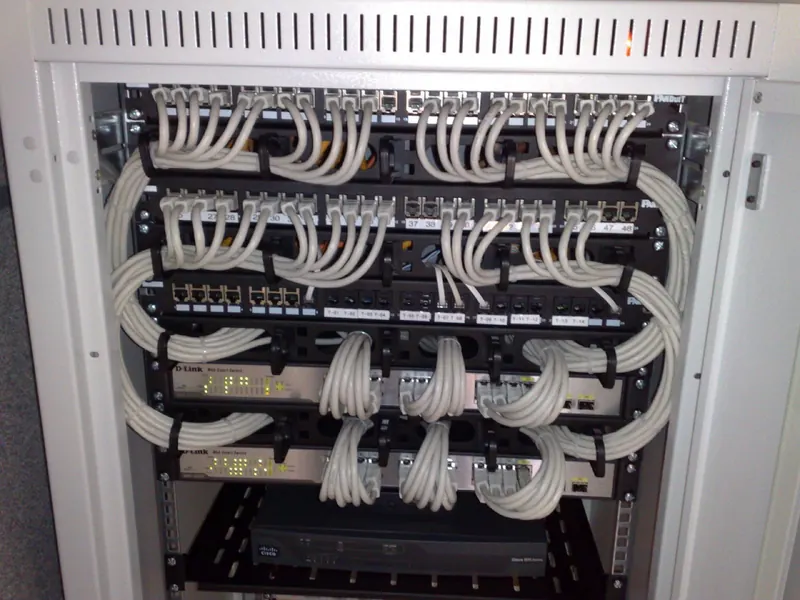
Network switches and patch panel with neat structured cabling in a Nairobi office rack

Cabling is the least glamorous part of an office fit-out and the most expensive to fix later. Once ceilings are closed and desks are in place, replacing a bad cable means lifting tiles, moving furniture and disturbing staff. That is why good structured cabling in Nairobi focuses on doing it right once: the correct cable, the correct route and proof that every link performs.

So this page explains what structured cabling includes, how to choose between copper and fibre, how we route and test cables and what drives the cost.

Cabling

What structured cabling includes

A structured system follows a standard layout, so any engineer can understand it. In other words, the next technician never has to guess. The main parts are:

Part Description
Horizontal cabling Cables from the rack to each outlet at desks, ceilings and devices
Backbone cabling Links between racks on different floors or buildings, often fibre
Racks and cabinets Hold patch panels, switches and power, with room for cooling
Patch panels Where each cable terminates in the rack, numbered to match outlets
Outlets and faceplates Wall, floor or ceiling points where devices plug in
Containment Trunking, trays, conduit and ducts that carry and protect cables
Patch leads Short cables that connect panels to switches and devices to outlets

The standard approach comes from international cabling standards published by bodies such as the Telecommunications Industry Association and ISO/IEC. Following them means your structured cabling in Nairobi will support equipment from any manufacturer.

Cabling

CAT6, CAT6A or fibre: choosing the media

Choosing the cable is a balance of speed, distance, cost and future plans. Also, the building's expected life matters, because cables usually outlast three or four generations of switches.

Media Typical speed Max channel length Best use
CAT6 U/UTP 1 Gbps (10 Gbps short runs) 100 m Most desks, phones, cameras, access points
CAT6A 10 Gbps 100 m Wi-Fi 6/6E/7 access points, server rooms, long-life buildings
Multi-mode fibre (OM3/OM4) 10 to 100 Gbps 300 m to 550 m at 10 Gbps Backbones inside a building or small campus
Single-mode fibre (OS2) 10 to 100 Gbps+ Several kilometres Links between buildings and large campuses

For most new offices, we recommend CAT6 for desks and CAT6A for access points and server rooms. Fibre makes sense whenever a run exceeds 90 metres, crosses between buildings or passes near heavy electrical equipment. In addition, fibre does not carry electrical surges, which protects equipment in lightning-prone areas.

Fire safety

Cable routes, containment and fire-stopping

The route a cable takes affects its speed, its lifespan and your safety. Therefore we plan routes before pulling a single cable.

  • Separation from power: data cables run apart from mains cables to avoid interference.
  • Proper containment: we use trays above ceilings, trunking along walls and conduit in exposed or outdoor areas.
  • Bend radius: cables never kink or bend sharply, because that damages performance.
  • No overfilling: containment stays below its fill limit, leaving room to add cables later.
  • Fire-stopping: wherever cables pass through fire walls or floors, we seal the opening to restore the fire barrier.
  • Support: long runs are tied and supported, never left hanging on ceiling grids.

Fire-stopping is often skipped by low-cost installers. Yet an unsealed hole lets smoke and fire spread between rooms, which matters for the safety of the building and for any fire inspection.

Technician testing a network cable with a certification tester
Every structured cabling link in Nairobi is tested before handover, and you keep the results.

Structured Cabling

Testing, labelling and as-built documentation

Testing is what separates a professional job from a cheap one, because a link can look fine yet fail at full speed. After termination, we test every link. Depending on the project, this means a full certification test against the cable category, or a verification test for smaller jobs. Either way, you receive the results.

Labelling follows a simple scheme. For example, outlet 2-14-B means floor 2, outlet 14, port B. The same label appears on the faceplate, the patch panel and the drawing. As a result, anyone can trace a fault in minutes.

Cabling

Structured cabling in Nairobi for offices, schools, hospitals and warehouses

Each building type brings its own demands, so the same cable plan rarely fits two sites.

  • Offices need flexible desk layouts, floor boxes in open areas and spare points for growth.
  • Schools need dense cabling for labs and classrooms, plus outdoor-rated runs for cameras.
  • Hospitals need tidy, cleanable containment and careful separation of clinical and guest networks.
  • Warehouses need long runs, often fibre, and rugged outlets for scanners and access points high on racks.

We also cable for security systems. Cameras, door controllers and intercoms all need data points, so we plan them with the CCTV installation and access teams. For Wi-Fi, each access point gets its own cable in the right ceiling position; see our business Wi-Fi page.

Smiling engineer holding a tablet in a data centre aisle

Cabling

Re-cabling a working office

Many clients need new cabling while staff keep working. That is harder than a fresh fit-out, yet it is very common in Nairobi offices that have grown over the years. So we plan this carefully: We plan this carefully:

  1. Audit. We map the existing cables and find which ones still pass tests.
  2. Phase the work. Next, we split the office into zones and schedule noisy work after hours or at weekends.
  3. Build in parallel. Then we install new racks and cables beside the old system, so nothing goes offline early.
  4. Cut over. We move users zone by zone, usually overnight, and test before staff return.
  5. Remove old cable. Finally, we strip out dead cables so ceilings and trunking stay clean.

Costs and pricing

Structured cabling cost per point

As a guide, a standard CAT6 point in a typical Nairobi office often falls between KSh 4,500 and KSh 8,000 including containment and testing. CAT6A and difficult routes cost more. Our article on cabling cost per point explains the numbers, and our structured cabling checklist helps you compare quotes.

Warranty and life expectancy

Good structured cabling in Nairobi should last 15 years or more. Several manufacturers offer long system warranties when an approved installer uses their full range of components and tests every link. Even without a formal warranty, using matched components from one maker reduces faults. We also keep your test results, so if a dispute arises later, there is proof of how each link performed on day one.

Server rooms and racks

Cabling ends at the rack, so the rack must be planned too. Otherwise, a tidy ceiling ends in a tangled cabinet. We size cabinets with space for growth, add cable managers, plan airflow and fit power distribution units. For larger rooms, our server room setup service covers cooling, power and access control. Our fibre optic installation team handles backbones between racks and buildings.

Why choose us

Why choose GS TechGuard for structured cabling in Nairobi

  • Standards-based design that supports any equipment brand.
  • Tested links, with results handed over for every point.
  • Clear labels and drawings that make future changes easy.
  • Clean workmanship: proper containment, fire-stopping and tidy racks.
  • Cross-system planning with security, Wi-Fi and power on the same project.

We work across Nairobi, including Westlands, Upper Hill, Kilimani, Industrial Area and Mombasa Road, and we travel to sites countrywide. To plan structured cabling in Nairobi for your building, request a site survey or explore our wider network infrastructure services.

Core network switch with fibre and copper connections

Get started

Book a site survey

Tell us about your site and an engineer will call you back within one working day to discuss your needs and arrange a visit.

  • Clear, itemised written quote
  • Security, network, fire and power from one team
  • Support and maintenance after handover

Prefer to talk? Call +254 184 379 590

We reply within one working day. Or call +254 184 379 590.

Frequently asked questions

How much does structured cabling cost per point?

A standard CAT6 data point in a typical Nairobi office often costs between KSh 4,500 and KSh 8,000, including the outlet, panel port, containment, testing and labour. CAT6A, long runs, new containment and after-hours work raise the price. We give an itemised quote per point after a survey.

CAT6 or CAT6A for a new office?

CAT6 handles 1 Gbps to every desk, which suits most offices today. CAT6A supports 10 Gbps over the full 100 metres and suits Wi-Fi 6 and Wi-Fi 7 access points, server rooms and buildings you plan to occupy for many years. Many clients use CAT6 for desks and CAT6A for access points.

Do you provide test certificates?

Yes. We test every link and hand over the results. For larger projects we run full certification tests against the cable category, and for smaller jobs we provide verification results. The report lists each outlet by its label, so you can match it to the drawings.

Can you re-cable around a working office?

Yes. We phase the work by zone, install new racks and cables alongside the old system and move users over at night or at weekends. Staff keep working during the day, and we test every point before they return.

Areas we serve

Installed and supported across Kenya

Our Nairobi team travels to sites countrywide. Choose your town for local details.

Planning a project or fixing a fault?

Tell us about the site. We will arrange a survey, give you a clear written quote and explain the options in plain language.

CallWhatsAppAsk usQuote