Mon to Fri, 8:00am to 5:00pmUtalii Court, Gesora Road, Nairobi

+254 184 379 590+254 719 450 317 Altinfo@gstechguard.co.ke

Costs and pricing

Fire alarm cost in Kenya: what you pay for and why

What a fire alarm system costs in Kenya in 2026, from small conventional systems for shops to addressable systems for apartments, hotels and hospitals, with the factors that move the price and a checklist for comparing quotes.

Red fire alarm sounder on a wall, one of the devices in fire alarm cost in Kenya

Quick answer

A small conventional fire alarm for a shop or small office typically costs KSh 80,000 to 250,000 in 2026. A medium addressable system for an office or apartment block of three to six floors usually costs KSh 400,000 to 1,500,000. Building size, detector types, interfaces and cabling move the price most.

Fire alarm cost in Kenya depends on the size of the building, the type of system, the number of devices, the cabling and the links to other equipment such as doors and lifts. A small shop and a ten-floor hotel need very different systems, so a single price is never useful. This guide gives indicative 2026 ranges, explains each cost factor and shows how to compare quotes. For installation, see our fire alarm installation service, part of our wider fire safety systems work.

Costs and pricing

Indicative fire alarm cost in Kenya for 2026

The table below shows typical ranges for complete systems, including equipment, cabling, installation, testing and commissioning, before VAT. They are not quotes, because every building is different.

System Typical scope Indicative range (KSh)
Small conventional system 2 to 4 zones, detectors, call points, sounders for a shop or small office 80,000 to 250,000
Medium addressable system Office or apartment block of 3 to 6 floors 400,000 to 1,500,000
Large addressable system Hotel, hospital or factory with interfaces 1,500,000+
Emergency lighting LED fittings and exit signs 4,000 to 12,000 per point

As a rule, the panel is only a small share of the total. Instead, detectors, sounders, cable and labour make up most of the fire alarm cost in Kenya. Our security systems price guide shows how fire alarms compare with other systems.

Costs and pricing

Conventional or addressable: the biggest cost decision

Fire alarms come in two main types, and the choice shapes the whole budget.

Conventional systems group detectors into zones. When a detector activates, the panel shows the zone, not the exact device. They cost less and suit small buildings with few rooms.

Addressable systems give each device its own address, so the panel shows exactly which detector or call point has activated. As a result, staff and firefighters find the fire faster, and faults are easier to trace. They cost more per device. However, they use less cable on large sites, because devices share a loop.

Feature Conventional Addressable
Location shown Zone only Exact device
Best for Shops, small offices, small homes Offices, apartments, schools, hotels, hospitals
Cable One circuit per zone Shared loops
Equipment cost Lower Higher
Fault finding Slower Faster

In practice, most buildings above two or three floors, and all buildings where people sleep, benefit from an addressable system.

Costs and pricing

Fire alarm cost factors

Several factors move the price up or down.

Building size and layout

More rooms mean more detectors, sounders and cable. In addition, complex layouts with many small rooms need more devices than open-plan floors of the same size.

Detector types

Standard smoke and heat detectors are the most affordable. By contrast, beam detectors for high warehouse roofs, aspirating systems for server rooms and special detectors for kitchens or hazardous areas cost more. Therefore, a warehouse may need fewer devices but a higher price per device.

Sounders, beacons and voice

Every area must hear the alarm. Sleeping areas, plant rooms and noisy workshops may need extra sounders or visual beacons. Large buildings may need a voice evacuation system, which adds speakers and amplifiers.

Interfaces with other systems

Many buildings link the fire alarm to access-controlled doors, lifts, air handling, smoke extraction, gas suppression or a PA system. Each interface adds modules, cable and testing time. Nevertheless, these links are often essential for safety.

Cabling and containment

Fire alarm cables should be fire resistant and fixed with metal clips, so they keep working during a fire. In addition, conduit or trunking may be needed in exposed areas. Long routes, high ceilings and finished buildings all raise labour costs.

Access and working hours

Occupied hotels, hospitals and offices often need night or weekend work. Similarly, high ceilings may need scaffolding or lifts. These conditions add to labour.

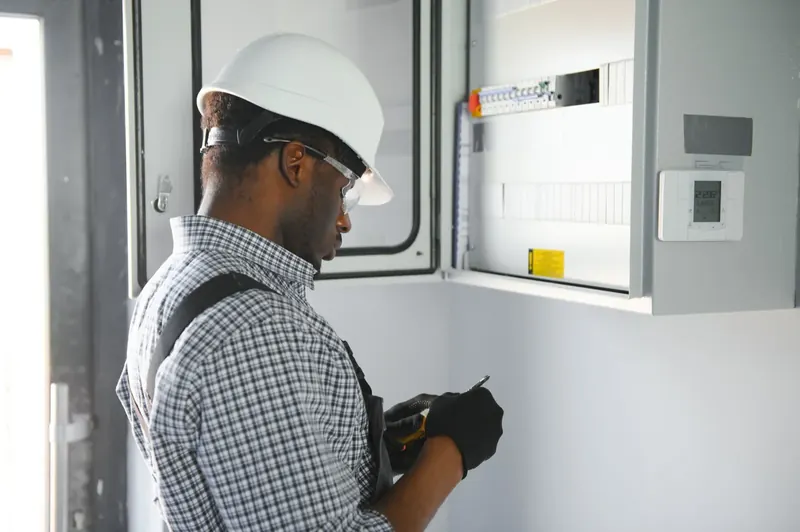
Technician wiring a fire alarm device
Cabling and labour make up a large share of fire alarm cost in Kenya.

Costs and pricing

Fire alarm cost in Kenya by building type

  • Shops and small offices. A small conventional system with a few zones is usually enough.
  • Apartment blocks. Corridors, stairs, plant rooms and car parks need coverage. Many developers choose addressable systems for blocks of four floors or more.
  • Schools. Dormitories need loud sounders and fast location, so addressable systems are common in boarding schools.
  • Hotels. Guest rooms, kitchens and laundries need many devices, often with voice evacuation.
  • Hospitals. Phased evacuation, interfaces with doors and lifts and special areas make these the most complex systems.
  • Warehouses and factories. High roofs may use beam detectors, and dust or heat may need special detector types.

See our apartments and estates and schools guides for sector advice.

Technician in a hard hat fitting a ceiling fire alarm device

Costs and pricing

Fire alarm cost after installation

A service visit for a small system typically costs KSh 8,000 to 25,000 in 2026. Larger buildings usually suit an annual contract. Read our fire alarm maintenance checklist for what each visit should cover.

Costs and pricing

How to compare fire alarm cost quotes

Quotes can look very different. So ask each supplier to confirm the following.

If one quote is far cheaper, check for missing devices, ordinary cable instead of fire-resistant cable or no interfaces. In those cases, the cheaper system may not protect people properly.

Ways to control fire alarm cost without cutting safety

There are sensible ways to manage the budget. First, install cabling during construction or fit-out, when ceilings are open. Second, choose an addressable panel with spare capacity, so you can extend it later. Third, reuse sound cable and devices when upgrading, after testing them. Finally, combine fire alarm, emergency lighting and maintenance in one contract, which reduces visits.

However, never cut detector coverage, sounder levels, cable quality or interfaces with escape doors. These items protect lives.

Upgrading an existing fire alarm

Many Kenyan buildings already have an older fire alarm. Sometimes it still works well. Often, however, spare parts are hard to find, faults keep returning or building changes have left gaps in coverage. In such cases, an upgrade may give better value than repeated repairs. For example, an old conventional panel can often be replaced with an addressable panel while reusing sound cable, after testing it. Similarly, detectors can be replaced floor by floor to spread the cost. As a result, the fire alarm cost in Kenya for an upgrade is often lower than for a brand-new system. Before deciding, ask for a condition survey that tests every device, measures cable insulation and lists what can be kept.

New buildings and fit-outs

For new buildings, the cheapest time to install a fire alarm is during construction. At that stage, cables run easily through open ceilings and walls, and devices fit neatly into the finished design. In contrast, adding a system after occupation means surface trunking, night work and disruption. Therefore, developers and fit-out managers should bring the fire alarm designer in early, ideally when the architect prepares the drawings.

Rules and approvals

Fire safety duties for workplaces come from rules made under the Occupational Safety and Health Act, 2007. In addition, county fire departments and building approvals may set requirements for new buildings. Your designer, county fire officer and auditor can confirm what applies to your building. Our fire safety audit support helps close gaps before the yearly audit.

Costs and pricing

Getting a firm price

The best way to turn an indicative fire alarm cost into a firm figure is a site survey. An engineer walks the building, counts devices, plans cable routes and checks interfaces. You then receive an itemised quote. Before the visit, gather floor plans if you have them, note the number of floors and rooms and list any equipment the alarm must control.

To get a priced proposal, request a site survey.

Get started

Book a site survey

Tell us about your site and an engineer will call you back within one working day to discuss your needs and arrange a visit.

  • Clear, itemised written quote
  • Security, network, fire and power from one team
  • Support and maintenance after handover

Prefer to talk? Call +254 184 379 590

We reply within one working day. Or call +254 184 379 590.

Frequently asked questions

How much does a fire alarm system cost in Kenya?

In 2026, a small conventional system typically costs KSh 80,000 to 250,000, a medium addressable system for a three- to six-floor building KSh 400,000 to 1,500,000, and large systems for hotels, hospitals or factories KSh 1,500,000 or more. A site survey gives a firm price.

Should I choose addressable or conventional?

Conventional systems suit small buildings with few rooms. Addressable systems show the exact device in alarm and suit larger buildings, multi-floor offices, apartments and anywhere people sleep.

How much does fire alarm maintenance cost?

A service visit for a small system typically costs KSh 8,000 to 25,000 in 2026. Larger buildings usually suit an annual contract with planned visits and response times.

Does the fire alarm need to unlock access-controlled doors?

Yes. Doors on escape routes must release when the fire alarm activates. This interface adds a small cost but is essential for safety.

Planning a project or fixing a fault?

Tell us about the site. We will arrange a survey, give you a clear written quote and explain the options in plain language.

CallWhatsAppAsk usQuote