Mon to Fri, 8:00am to 5:00pmUtalii Court, Gesora Road, Nairobi

+254 184 379 590+254 719 450 317 Altinfo@gstechguard.co.ke

Fire and safety

Fire alarm system maintenance in Kenya: what should be checked?

A practical fire alarm maintenance checklist for Kenyan buildings, covering the control panel, detectors, call points, sounders, batteries, cabling and records, with guidance on how often each check should happen.

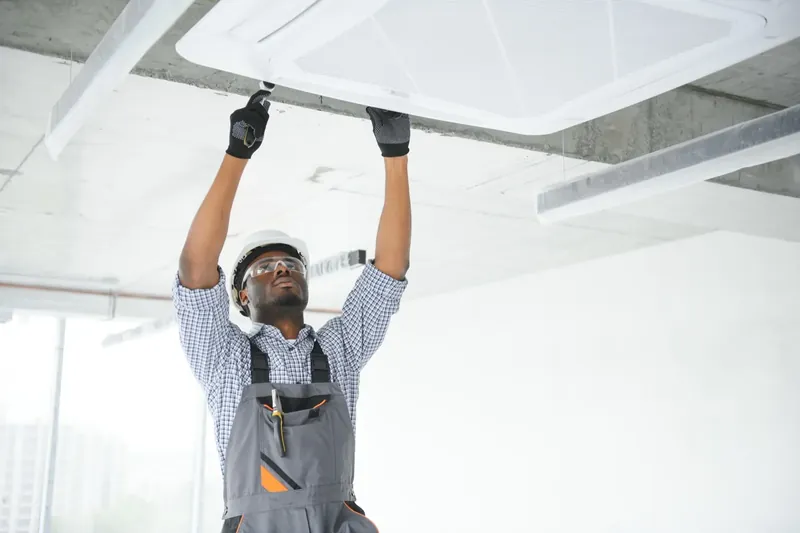
Technician testing a ceiling detector using a fire alarm maintenance checklist

Quick answer

A fire alarm needs a quick weekly test by site staff, a technical service at least every six months and a full yearly inspection. Each visit should cover the panel, detectors, call points, sounders, batteries and cabling. Every test and fault must be written in a logbook.

A fire alarm maintenance checklist keeps a life safety system ready for the one day it really matters. Fire alarms often sit quietly for years, so faults can build up unnoticed: a dusty detector, a weak battery, a sounder that no longer works or a zone left disabled after building works. This guide explains what to check, how often and who should do it. For professional servicing, see our fire alarm maintenance service, which sits within our wider fire safety systems work.

Support and maintenance

Why a fire alarm maintenance checklist matters

Safety officer ticking a checklist beside red fire suppression cylinders

A fire alarm only protects people if every part works together. When paint blocks a detector, or a sounder fails in a dormitory, the system may look healthy on the panel while leaving people unprotected. In addition, Kenyan workplace rules expect occupiers to maintain and test fire equipment, and your annual fire safety audit and your insurer will both ask for records. As a result, a written fire alarm maintenance checklist protects people, property and your compliance position at the same time.

Timing

How often should each check happen?

The table below gives a practical schedule for most offices, apartments, schools, hotels and warehouses. Your system manufacturer, auditor or insurer may require more.

Frequency Who What
Weekly Trained site staff Test one call point, confirm sounders operate, check panel shows normal
Monthly Site staff Inspect panel, check for disabled zones, test emergency lighting briefly
Every 6 months Qualified technician Full service of panel, batteries, a share of detectors and all sounders
Yearly Qualified technician Test every detector and call point, full battery load test, report
After any alteration Qualified technician Check affected zones, detectors and interfaces

Support and maintenance

1. Fire alarm maintenance checklist for the control panel

The panel is the brain of the system. So start every visit there.

Repeated faults in the log often point to a damaged cable, a failing detector or water entering a device. Therefore, do not simply reset the panel. Instead, find and fix the cause.

Support and maintenance

2. Fire alarm maintenance checklist for detectors and call points

Detectors must be clean, clear and in the right place. Over time, dust, insects, cooking fumes and paint can block them. Meanwhile, building changes such as new partitions can leave a room without coverage.

During each service, a technician tests a share of detectors with approved test gas or heat, so that every detector gets a test at least once a year. The technician also operates each manual call point with a test key, and each one should be visible, labelled and free from obstructions. In addition, check that no detector is still covered by a protective cap left from building works, which is a surprisingly common problem.

Technician fitting and testing a ceiling fire alarm device
Every service on our fire alarm maintenance checklist starts at the control panel.

3. Sounders, beacons and occupant notification

An alarm is only useful if people hear or see it. So test every sounder and beacon, ideally during the yearly inspection with each zone in turn.

Pay special attention to sleeping areas, plant rooms, toilets and noisy workshops. In these places, sound levels may be too low, so you may need extra sounders or beacons. Similarly, people with hearing impairments may need visual alarms or vibrating pagers. Where you have a voice evacuation system, check that messages play clearly in every zone.

4. Backup power and cabling condition

Every fire alarm panel has standby batteries that keep it working during an outage. However, batteries age, especially in hot rooms and where outages are frequent. As a guide, sealed lead-acid batteries in fire panels usually need replacing every three to five years.

During service, the technician should measure battery voltage, test the charger and, at least yearly, run a load test. The technician should also inspect visible cabling: look for damage, loose fixings, missing fire-rated clips and cables exposed by building works. In addition, check that the mains supply is on a labelled, locked circuit.

Access control

5. Interfaces with other systems

Modern fire alarms often control other equipment. For example, they may release access-controlled doors, return lifts to the ground floor, shut down air handling, start smoke extraction or trigger a suppression system. The technician must test each of these links, because a failed interface can trap people or spread smoke. So include every interface in your fire alarm maintenance checklist, and record the result of each test.

Support and maintenance

6. Documentation, handover and improvement notes

In addition, the technician should leave improvement notes: areas without coverage, devices near end of life or interfaces that need attention. Over time, these notes become a simple plan for upgrades.

Support and maintenance

Fire alarm maintenance checklist by building type

Different buildings bring different risks.

  • Apartments. Common corridors, stairs and plant rooms need regular checks, and residents must know what to do when the alarm sounds.
  • Schools. Dormitories are the priority. Test sounders in every dorm and run drills each term.
  • Hotels. Guest rooms, kitchens and laundries need checks scheduled around occupancy.
  • Hospitals. Phased evacuation and interfaces with doors and lifts need careful testing.
  • Warehouses. High roofs may use beam detectors, which need alignment checks and cleaning.
Safety officers checking fire extinguishers on a warehouse floor

Reducing false alarms

False alarms waste time and, worse, teach people to ignore the alarm. Common causes include dust, steam from kitchens and showers, insects, cooking smoke and building works. Fortunately, you can reduce most of them. For example, move or change detector types in kitchens, cover detectors during dusty works and remove covers afterwards, and clean detectors regularly. In addition, record every false alarm, because patterns show where action is needed.

Keeping staff ready

Equipment is only half of fire safety. People must also know what the alarm means and what to do. So include staff readiness in your fire alarm maintenance checklist. For example, make sure fire wardens know their zones, new staff learn the escape routes during induction and everyone takes part in at least one drill a year. After each drill, note how long evacuation took, which exits people used and any problems, such as locked doors or people who did not hear the sounders. In addition, keep the zone plan beside the panel up to date, because wardens and firefighters rely on it to find the source of an alarm quickly.

Upgrading an old fire alarm

Sometimes maintenance shows that a system is near the end of its life. Common signs include spare parts that are no longer available, frequent faults that keep returning, conventional zones that make it hard to find a fire quickly, and coverage gaps after building changes. In such cases, an upgrade to an addressable system may cost less over time than repeated repairs. Our guide to fire alarm costs in Kenya explains typical prices.

Who carries out each fire alarm maintenance checklist item?

Trained site staff can do simple weekly tests, such as a facilities officer or caretaker. In contrast, a qualified technician should handle technical servicing and yearly inspections, with the right tools and knowledge of your panel. Above all, never let untrained people disable zones or change panel settings.

Costs and pricing

What fire alarm maintenance costs

A service visit for a small system typically costs KSh 8,000 to 25,000 in 2026, depending on the number of devices and the building. Larger systems usually suit an annual contract with planned visits and agreed response times. For other ranges, see our security systems price guide.

How it works

Preparing for your fire safety audit

Fire extinguisher with an inspection checklist

A complete fire alarm maintenance checklist makes your yearly audit much easier. Before the auditor arrives, make sure the logbook is up to date, you have cleared all faults and filed service reports. Our guide to fire safety audit requirements explains what auditors typically look for, and our fire safety audit support helps you close gaps beforehand. You can also read the Occupational Safety and Health Act, 2007, under which workplace fire rules are made.

To arrange servicing for your building, request a quote.

Get started

Book a site survey

Tell us about your site and an engineer will call you back within one working day to discuss your needs and arrange a visit.

  • Clear, itemised written quote
  • Security, network, fire and power from one team
  • Support and maintenance after handover

Prefer to talk? Call +254 184 379 590

We reply within one working day. Or call +254 184 379 590.

Frequently asked questions

How often does a fire alarm need servicing in Kenya?

Most buildings need a quick weekly test by trained staff, a technical service at least every six months and a full yearly inspection of every device. Your auditor, insurer or the system manufacturer may require more frequent checks.

How long do fire alarm panel batteries last?

Sealed lead-acid standby batteries usually last three to five years, less in hot rooms or where outages are frequent. A technician should measure them at every service and load test them at least once a year.

Can our own staff test the fire alarm?

Yes, trained staff can do the weekly call point test and record it in the logbook. However, a qualified technician should carry out technical servicing, detector testing and yearly inspections.

What records should we keep for fire alarm maintenance?

Keep a logbook with weekly tests, faults, false alarms, service reports and changes to the building or system. Auditors and insurers will ask for these records.

Planning a project or fixing a fault?

Tell us about the site. We will arrange a survey, give you a clear written quote and explain the options in plain language.

CallWhatsAppAsk usQuote