Mon to Fri, 8:00am to 5:00pmUtalii Court, Gesora Road, Nairobi

+254 184 379 590+254 719 450 317 Altinfo@gstechguard.co.ke

Power and weighing

How often should you calibrate weighing scales in Kenya?

How often to calibrate weighing scales in Kenya, from shop counters and platform scales to weighbridges, with the factors that shorten the interval, the daily checks staff can do and how calibration differs from legal verification.

Technician placing test weights to calibrate weighing scales

Quick answer

Most businesses calibrate weighing scales every 6 to 12 months, while heavily used or harsh-environment scales may need checks every 3 months. Scales should also be checked after moves, repairs, overloads or suspicious readings. Scales used for trade must also be verified by county weights and measures inspectors.

Businesses that buy, sell, pack or process goods by weight need to calibrate weighing scales regularly. A scale that reads even slightly wrong can cost money every day, whether you are paying farmers for produce, charging customers by the kilo or filling packets in a factory. However, there is no single interval that suits every scale. This guide explains typical intervals, the factors that change them and how calibration fits with legal verification in Kenya. For on-site service, see our weighing scale calibration service, part of our industrial weighing and calibration work.

Weighing

What calibration means

Pressure gauge on calibration equipment

In simple terms, calibration compares a scale's readings with known reference weights across its range. The technician records the errors, adjusts the scale where needed and issues a certificate showing the results before and after. In other words, calibration tells you how accurate the scale is and brings it back within tolerance.

However, calibration is different from legal verification. In Kenya, scales used for trade, such as shop counters, produce intake scales and weighbridges, must also be verified and stamped by the county weights and measures inspectors under the Weights and Measures Act. We prepare scales for verification, yet the inspectors carry out the legal stamp.

Weighing

Typical intervals to calibrate weighing scales

The table below gives typical intervals. Your quality system, customers, auditors or the manufacturer may require more frequent checks.

Scale type Typical use Typical interval
Shop counter and retail scales Selling goods by weight 6 to 12 months, plus legal verification
Bench and platform scales Packing, dispatch, stores 6 to 12 months
Production and checkweighers Filling and packing lines 3 to 6 months, with daily checks
Laboratory balances Quality control 6 to 12 months, with daily checks
Produce intake scales Cooperatives and buyers 3 to 6 months in busy seasons
Weighbridges Trucks and bulk goods 6 to 12 months, plus legal verification

As a rule, the more a scale matters to money, safety or quality, the more often you should calibrate weighing scales of that type.

How often to calibrate weighing scales in Kenya

Factors that shorten the interval

Several conditions mean you should calibrate weighing scales more often.

Heavy use. A scale weighing hundreds of loads a day wears faster than one used occasionally. Therefore, busy intake and dispatch scales often need shorter intervals.

Harsh environments. Dust, moisture, heat, vibration and corrosive materials all affect load cells and electronics. For example, scales in flour mills, fish markets, cement plants and coastal sites drift faster.

Overloads and impacts. Dropping heavy items onto a platform, or driving overloaded trucks onto a weighbridge, can damage load cells. After any overload, check the scale.

Moves and repairs. Moving a scale, even a short distance, can change its readings. Similarly, any repair, especially to a load cell or indicator, requires calibration before use.

Quality and customer requirements. Many quality systems and large customers set their own intervals and expect certificates. In such cases, follow the stricter requirement.

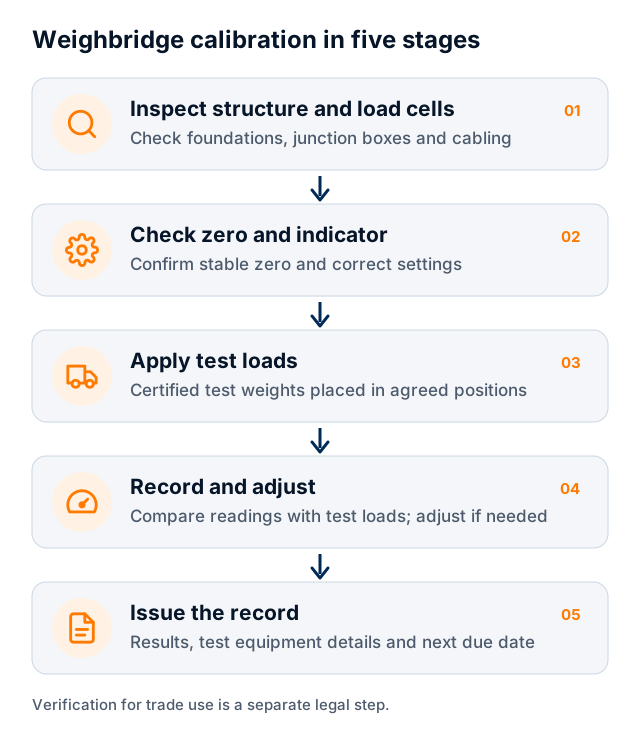
Weighbridge calibration steps diagram

Weighing

Signs your weighing scales need attention now

Importantly, do not wait for the next scheduled visit if you see these signs.

  • The scale does not return to zero when empty
  • Readings change when the same item is weighed again
  • Readings differ between corners of the platform
  • Customers or suppliers dispute weights
  • The display flickers or shows error codes
  • The scale was moved, dropped, flooded or overloaded

In each case, stop using the scale for trade until a technician checks it.

People and training

Daily checks staff can do

Between visits, simple checks help you spot problems early.

These checks take only a minute or two at the start of each shift, yet they often catch faults long before they cost money. In addition, a record of daily checks supports your quality system and helps a technician diagnose problems.

How it works

How we calibrate weighing scales on site

In addition, on-site calibration avoids moving the scale, which itself can affect accuracy. For large scales and weighbridges, special test weight sets and equipment are needed. See our weighbridge calibration page.

Weighing scales certificates and accreditation

Typically, a calibration certificate records the test weights used, the results and the date. For some customers or quality systems, you may need a certificate from a laboratory accredited by the Kenya Accreditation Service. GS TechGuard does not claim KENAS accreditation. Instead, we provide on-site calibration with traceable weights and records, and we can help you arrange accredited calibration where your auditor requires it.
Maintenance helps weighing scales stay accurate

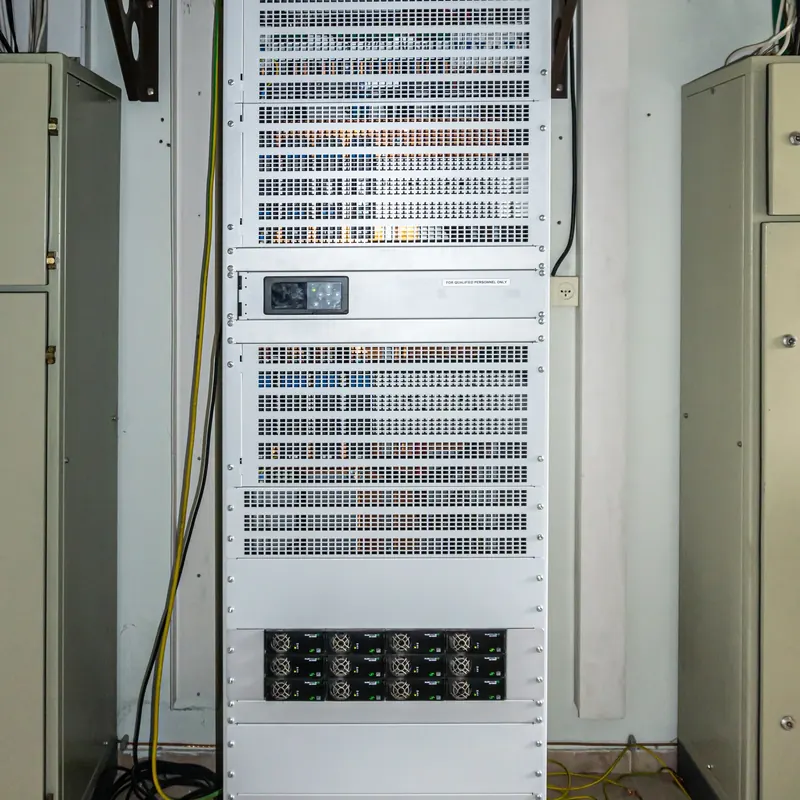
Calibration fixes drift, while maintenance prevents it. Regular cleaning, checking cables and junction boxes, protecting load cells from water and replacing worn parts all help scales hold their accuracy longer. Consequently, many businesses combine calibration and maintenance in one contract. Our weighing scale maintenance page explains the options.

Why you should calibrate weighing scales on a schedule

Small errors add up quickly. For example, a produce scale that reads 1 percent low on 10 tonnes of deliveries a day underpays farmers by 100 kilograms every day. Over a season, that becomes a large sum and, just as importantly, a loss of trust. Similarly, a packing line that overfills each packet by a few grams gives away product all year. In contrast, a scale that reads high may lead to customer complaints, rejected consignments or penalties. So a schedule to calibrate weighing scales is not a cost but a form of protection.

Calibrate weighing scales in agriculture and cooperatives

Agricultural buyers, dairies, tea and coffee factories and cooperatives handle large volumes by weight. During peak seasons, intake scales work almost non-stop, often outdoors or in dusty sheds. As a result, they drift faster than scales in clean offices. Therefore, we recommend checks before each peak season, mid-season checks for the busiest scales and daily check-weight tests by clerks. In addition, linking weighing records with cameras helps resolve disputes with farmers quickly.

Weighing

Calibrate weighing scales in factories and laboratories

Factories that fill, pack or mix by weight depend on accurate scales for product quality and cost control. Meanwhile, laboratories rely on balances for quality tests. In these settings, the quality system usually sets calibration intervals, along with daily or per-shift checks. Consequently, records matter as much as the calibration itself, because auditors will ask for them.

How it works

Planning when to calibrate weighing scales

Above all, a simple calibration plan helps you stay on track.

Over time, your records show which scales need more attention and which are reliable. In addition, they give auditors, customers and inspectors clear evidence that you manage accuracy carefully, which often shortens audits and settles disputes before they grow.

Costs and pricing

Costs and downtime

Naturally, calibration costs depend on the type of scale, the number of scales and travel. Combining several scales in one visit reduces cost per scale, and grouping sites in the same area cuts travel time as well. Meanwhile, planned visits avoid the much larger cost of disputes, rejected batches or downtime when a scale fails. Our security systems price guide lists some related service ranges.

To plan when to calibrate weighing scales at your site, request a quote.

Get started

Book a site survey

Tell us about your site and an engineer will call you back within one working day to discuss your needs and arrange a visit.

  • Clear, itemised written quote
  • Security, network, fire and power from one team
  • Support and maintenance after handover

Prefer to talk? Call +254 184 379 590

We reply within one working day. Or call +254 184 379 590.

Frequently asked questions

How often should a weighing scale be calibrated?

Most businesses calibrate every 6 to 12 months. Busy, harsh-environment or quality-critical scales may need checks every 3 to 6 months. Calibrate after any move, repair or overload, and follow any stricter interval set by your customers or auditors.

Is calibration the same as verification by weights and measures?

No. Calibration measures and adjusts accuracy. Legal verification is the official check and stamp by county weights and measures inspectors for scales used in trade. We prepare scales for verification.

Is your calibration certificate accredited?

GS TechGuard does not claim KENAS accreditation. We provide on-site calibration with traceable test weights and full records, and we can help arrange accredited calibration where your auditor requires it.

Can you calibrate scales on site?

Yes. We calibrate bench scales, platform scales, intake scales and weighbridges on site, which avoids moving the scale and reduces downtime.

Planning a project or fixing a fault?

Tell us about the site. We will arrange a survey, give you a clear written quote and explain the options in plain language.

CallWhatsAppAsk usQuote